
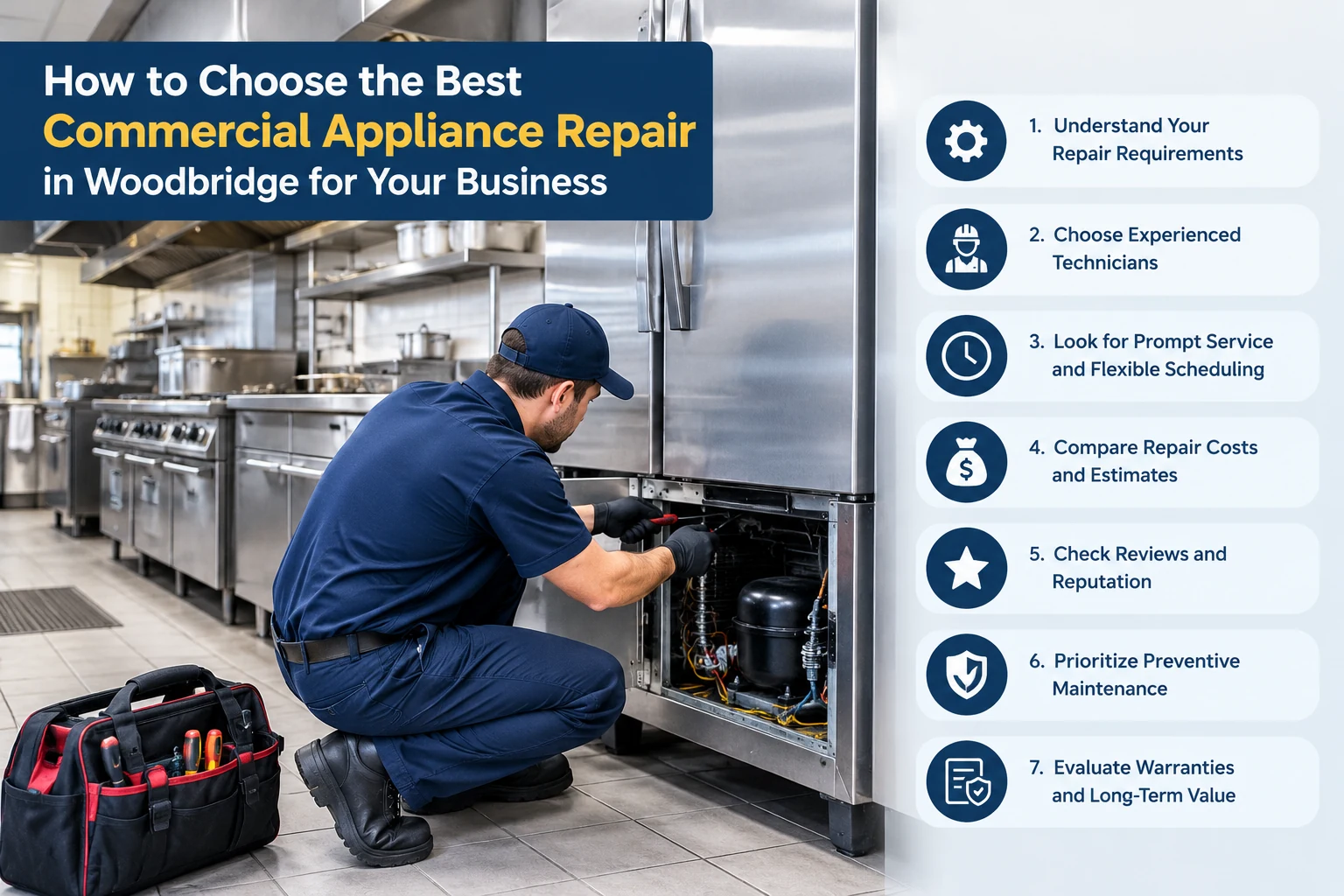
Commercial appliances play a vital role in keeping businesses running smoothly. Restaurants depend on refrigerators, freezers, ovens, and dishwashers, while hotels and laundromats rely on heavy-duty laundry equipment. When these appliances stop working, businesses may experience delays, financial losses, and interruptions to daily operations. Choosing a reliable repair provider helps business owners address equipment problems efficiently and maintain a productive environment. If you need commercial appliance repair Woodbridge, understanding how to evaluate service providers can help you make an informed decision and protect your business investment.
1. Understand Your Business’s Repair Requirements
Before contacting a repair company, identify which appliance needs attention and describe the problem clearly. Commercial equipment often operates more frequently than residential appliances, making timely maintenance and appropriate repairs particularly important.
Different businesses have different equipment requirements. Restaurants may need assistance with commercial refrigerators, freezers, ovens, and dishwashers. Hotels might require repairs for laundry machines, while other businesses may depend on specialized food preparation equipment.
Start by considering the following factors:
- The type and brand of the malfunctioning appliance.
- The symptoms and when the problem first appeared.
- Whether the appliance affects essential business operations.
- Any error codes or unusual noises.
- Previous repairs or recurring equipment issues.
Providing these details helps a technician understand the situation and prepare for the service visit.
2. Choose Technicians With Commercial Experience
Commercial appliances can differ significantly from standard household equipment. They may have larger capacities, specialized components, and demanding operating requirements. A technician experienced with commercial systems may be better prepared to identify faults and recommend appropriate repairs.
Before hiring a company, ask whether its technicians regularly service the equipment used in your business. Confirm that they have relevant training and can work with your appliance’s make and model.
Consider these points when evaluating a service provider:
- Experience repairing commercial equipment.
- Familiarity with relevant appliance brands.
- Appropriate technical training and qualifications.
- Access to suitable diagnostic tools.
- Clear explanations of repair options and limitations.
Selecting a provider with relevant expertise can help reduce unnecessary delays and improve confidence in the repair process.
3. Look for Prompt Service and Flexible Scheduling
Equipment breakdowns can disrupt business operations, particularly when essential appliances stop working during busy periods. A refrigerator that cannot maintain its temperature may threaten food safety, while a malfunctioning dishwasher can slow down restaurant service.
When comparing providers, ask about appointment availability, response times, and whether emergency service is offered. Avoid assuming that every company provides same-day repairs; confirm the actual availability before scheduling.
A dependable provider should communicate clearly about:
- Available appointment windows.
- Expected arrival times.
- Estimated repair duration.
- Replacement-part availability.
- Any additional charges for urgent service.
Planning repairs around operating hours, where possible, can help minimize disruption to employees and customers.
4. Compare Repair Costs and Estimates
Repair expenses vary depending on the appliance, fault, labor requirements, and replacement components. Requesting a written estimate before authorizing work helps business owners understand the likely cost and plan their budgets.
A professional provider should explain the diagnosis, recommended solution, and expected expenses. If additional problems are discovered during the repair, ask for approval before proceeding with extra work.
When reviewing estimates, consider:
- Diagnostic and service-call fees.
- Labor charges.
- Replacement-part costs.
- Potential additional expenses.
- Warranty coverage for parts and workmanship.
The lowest estimate is not always the best option. An inexpensive repair that fails quickly may create additional expenses and operational interruptions. Compare the overall value, quality of service, and warranty terms before making your decision.
5. Check Reviews and Business Reputation
Customer feedback can help you understand how a repair company treats its clients. Look for reviews that mention professionalism, communication, punctuality, pricing transparency, and the quality of completed repairs.
Business owners should pay particular attention to feedback from other commercial customers because their equipment requirements may be closer to their own needs.
Before booking a service, check whether the company:
- Communicates clearly about service expectations.
- Explains problems and possible solutions.
- Provides transparent pricing information.
- Follows up when necessary.
- Handles customer concerns professionally.
Online reviews cannot guarantee future results, but they can provide useful information when considered alongside experience, service policies, and recommendations.
6. Prioritize Preventive Maintenance
Waiting until an appliance breaks down can lead to unexpected expenses and operational disruptions. Preventive maintenance helps identify potential issues before they become more serious.
Depending on the equipment, maintenance may involve inspecting components, cleaning accessible filters, checking door seals, examining hoses, and reviewing operating performance. Always follow the manufacturer’s maintenance recommendations and use qualified technicians for tasks requiring specialized expertise.
A maintenance plan can help businesses:
- Identify wear before major component failure.
- Maintain reliable equipment performance.
- Reduce avoidable operational interruptions.
- Plan servicing around business schedules.
- Track repair history and recurring issues.
Regular maintenance does not eliminate every breakdown, but it can support better equipment management and more predictable maintenance spending.
7. Evaluate Repair Warranties and Long-Term Value
Before selecting a provider, ask whether completed repairs and replacement parts include a warranty. Request written terms explaining the coverage period, exclusions, and process for reporting a recurring problem.
It is also important to consider whether repairing an older appliance makes financial sense. Compare the repair estimate with replacement costs, equipment condition, expected future maintenance, and the consequences of another breakdown.
A professional technician can explain the available options, helping you decide whether repair or replacement better suits your operational needs and budget.
Conclusion
Choosing the right commercial appliance repair provider requires careful consideration of experience, scheduling, pricing, customer feedback, and maintenance support. Businesses that evaluate these factors can make more informed decisions and reduce the disruption caused by equipment failures. When researching commercial appliance repair Woodbridge, prioritize technicians who understand your equipment, explain their recommendations clearly, and provide transparent estimates. Combining professional repairs with preventive maintenance can help protect valuable equipment, control avoidable expenses, and keep daily business operations running as smoothly as possible.
