
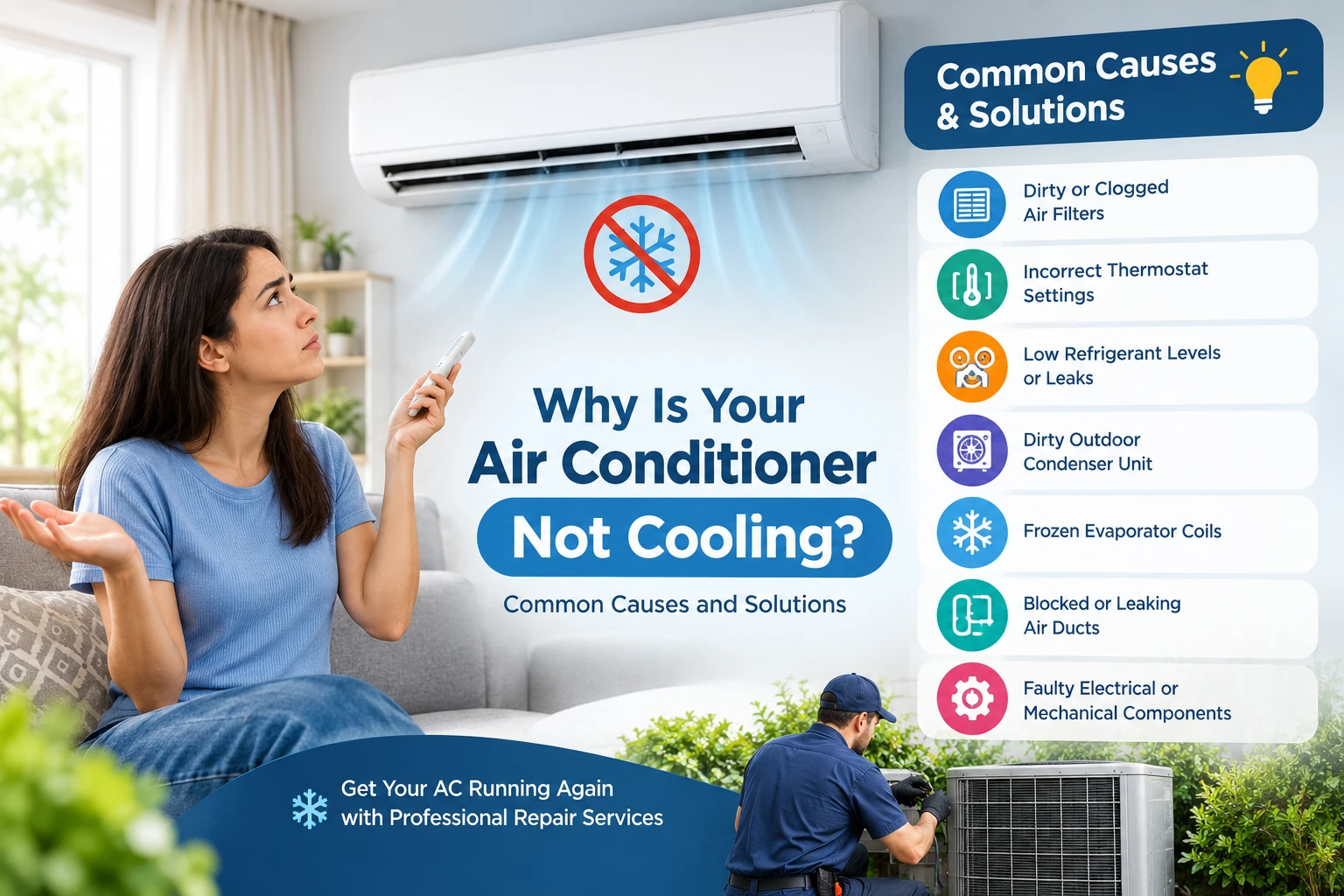
An air conditioner is essential for maintaining a comfortable indoor environment, especially during the hot summer months in Woodbridge, Virginia. However, when your AC runs continuously but fails to produce cool air, it can make your home uncomfortable and increase electricity bills. This problem can occur because of several reasons, including dirty air filters, incorrect thermostat settings, refrigerant leaks, frozen evaporator coils, or faulty components.
Understanding these common issues can help homeowners identify potential problems and take appropriate action. While some minor issues can be resolved through basic troubleshooting, others require professional attention. Knowing when to contact an expert for air conditioner repair Woodbridge can help prevent additional damage and restore your cooling system’s performance.
1. Dirty or Clogged Air Filters
A dirty air filter is one of the most common reasons an air conditioner cannot cool a home effectively. Air filters collect dust, dirt, pet hair, and other airborne particles. When these materials accumulate, they restrict airflow and make it difficult for the system to circulate cool air.
Common signs of a clogged air filter include:
- Weak airflow from air conditioning vents.
- Longer cooling cycles than usual.
- Uneven temperatures throughout the house.
- Increased dust around indoor surfaces.
- Reduced cooling performance.
Possible solution:
Inspect your air filter regularly and clean or replace it according to the manufacturer’s recommendations. Many standard filters require replacement every one to three months, depending on household conditions, filter type, and usage.
2. Incorrect Thermostat Settings
Sometimes, an air conditioner does not cool properly because of incorrect thermostat settings. If the thermostat is accidentally set to Fan mode instead of Cool mode, the system may circulate room-temperature air without providing cooling.
Check these thermostat settings:
- Make sure the thermostat is set to Cool mode.
- Select a temperature lower than the current indoor temperature.
- Set the fan to Auto for normal cooling operation.
- Replace weak thermostat batteries if necessary.
- Keep the thermostat away from direct sunlight and heat-producing appliances.
If the thermostat is unresponsive or displays incorrect temperatures, it may require professional inspection.
3. Low Refrigerant Levels or Refrigerant Leaks
Refrigerant is an essential part of the air conditioning process. It absorbs heat from indoor air and transfers that heat outside. When refrigerant levels become low because of a leak, the system may struggle to produce cool air.
Warning signs of refrigerant problems include:
- Warm air coming from the vents.
- Ice forming on refrigerant lines.
- Longer cooling cycles.
- Hissing or bubbling sounds near refrigerant components.
Possible solution:
A qualified HVAC technician should inspect the system, identify the source of the leak, and complete the necessary repairs. Refrigerant should not simply be added without investigating the underlying problem. Homeowners should never attempt to handle refrigerant themselves.
4. Dirty Outdoor Condenser Unit
The outdoor condenser unit releases heat collected from inside your home. When dirt, grass, leaves, or other debris block the unit, it cannot release heat efficiently. This can reduce cooling performance and place additional strain on the air conditioner.
Here are some basic maintenance tips:
- Remove loose leaves and debris around the outdoor unit.
- Keep plants and shrubs away from the condenser.
- Maintain adequate space for proper airflow.
- Avoid storing equipment near the unit.
- Schedule professional cleaning when necessary.
Always turn off the system before performing basic exterior cleaning. Avoid opening electrical panels or handling internal components.
5. Frozen Evaporator Coils
Evaporator coils absorb heat from indoor air during the cooling process. When airflow becomes restricted or refrigerant-related problems develop, the coils may become too cold and accumulate ice. This prevents the system from absorbing heat properly.
Common symptoms include:
- Little or no airflow from vents.
- Ice on refrigerant lines or indoor components.
- Water around the indoor unit after ice melts.
- Reduced cooling despite continuous operation.
Possible solution:
Turn off the cooling mode and allow the ice to melt naturally. Do not scrape the ice or use sharp objects. If the coils freeze repeatedly, contact an HVAC professional to identify the underlying cause.
6. Blocked or Leaking Air Ducts
Air ducts distribute conditioned air throughout your home. If ducts become blocked, disconnected, or damaged, cool air may not reach certain rooms properly. Leaking ducts can also allow conditioned air to escape into attics, crawl spaces, or wall cavities.
Signs of ductwork problems include:
- Some rooms remain warmer than others.
- Weak airflow from multiple vents.
- Unusual dust accumulation.
- Higher energy bills.
- Poor indoor temperature consistency.
Keep supply and return vents free from furniture, curtains, and other obstructions. If the problem continues, a technician can inspect the ductwork and recommend appropriate repairs.
7. Faulty Electrical or Mechanical Components
An air conditioner depends on several electrical and mechanical components to operate correctly. Problems with capacitors, contactors, fan motors, or other parts can interrupt normal cooling operations.
You may notice the following warning signs:
- Clicking or buzzing sounds.
- Frequent system shutdowns.
- The outdoor fan not operating properly.
- The air conditioner failing to start.
- Repeated circuit breaker trips.
These problems require professional diagnosis. Avoid opening electrical panels or attempting component replacements yourself because electrical repairs can create serious safety risks.
When Should You Contact a Professional for Air Conditioner Repair Woodbridge?
Basic troubleshooting may resolve minor cooling issues, but persistent problems often require an experienced technician. Professional assistance is recommended when:
- Your air conditioner continues blowing warm air.
- Ice repeatedly forms on the indoor unit.
- The circuit breaker trips more than once.
- You notice burning smells or unusual electrical noises.
- Cooling performance remains poor after replacing the filter.
- The system frequently turns on and off.
A qualified technician can inspect the equipment, identify the underlying issue, and recommend suitable repair solutions based on the system’s condition.
Conclusion
An air conditioner that runs without cooling properly can have several causes, including dirty filters, incorrect thermostat settings, refrigerant leaks, frozen evaporator coils, blocked ducts, and faulty electrical components. Regular filter replacement, proper airflow, and routine maintenance can help prevent some common cooling problems.
However, complicated mechanical, electrical, and refrigerant-related issues should always be handled by trained professionals. If your cooling system continues to struggle, professional air conditioner repair Woodbridge services can help identify the problem and restore reliable performance. Timely repairs and proper maintenance can also support energy efficiency, extend equipment life, and keep your home comfortable throughout the summer.